Housing Is Economic Infrastructure
Designing the places that allow communities to grow well
By Dan Rider, Design Director
As North Carolina connects housing more directly to economic development, Cline’s Design Director, Dan Rider, explores why housing should be understood as essential infrastructure and how thoughtful design can help communities grow well.
Growth is often measured in jobs, investment, infrastructure, and population. But for the people living that growth every day, it’s felt on a more personal level. It’s in the length of a commute, the cost of rent, the ability to live near work, school, childcare, or transit. It shows up in the coffee shop that becomes part of a morning routine, the park where families gather, the chance to age near community, or simply finding a place that feels like home.
North Carolina’s First in Opportunity Strategic Economic Development Plan reinforces what communities across the state already know: long-term growth depends on more than job creation and business investment. It depends on the everyday systems that let people, families, employers, and communities thrive.
Housing sits at the center of that conversation.
For those of us shaping the built environment, that’s more than an economic development issue, it’s a design issue. If housing determines where people can live, how they move through their day, and how neighborhoods evolve, then housing has to be treated as essential infrastructure, not just for growth, but for quality of life.
Housing shapes the human experience of growth
Housing is more than shelter. It’s more than a market condition or a number of units. Housing shapes how people live, work, commute, care for their families, and stay connected to their neighbors.
Where housing and opportunity coexist, commutes get stronger, local businesses maintain a steadier customer base, families gain more stability, older adults stay closer to friends and family, and employers have an easier time attracting and keeping talent. Take housing away, and the opposite happens: workers get pushed farther from jobs, households absorb more stress, and communities lose the diversity that keeps growth sustainable. Growth is fundamentally challenged.
This is why housing belongs in the economic development conversation: it supports the people behind the economy.
At Cline, we see it across every housing type we design including multifamily, affordable, senior, workforce, and mixed-use. Each one matters because each one supports a different part of life.
Infrastructure determines where growth can happen
Housing doesn’t work in a vacuum. Design vision alone can’t create a thriving community without the infrastructure to support it. A well-designed home means little if the roads, utilities, and services around it can’t keep pace.
Water and wastewater capacity, transportation access, energy reliability, digital infrastructure, and site readiness all influence where housing can realistically happen, which communities can support new residents, and which projects move forward.
For developers and municipalities, that means housing strategy and infrastructure strategy have to move together. The question isn’t only where housing is needed, but where housing can be supported responsibly and efficiently, without straining the systems in place.
This balance takes collaborating early: planning, architecture, landscape architecture, interiors, and development strategy all need to work from a shared understanding of a site’s context, infrastructure limitations, and a community’s long-term values. These set the stage for the kind of housing a community actually needs. These are the building blocks of place.
More housing cannot mean one housing type
Just as different families need different supports and structure, different communities need different tools. North Carolina’s housing needs won’t be solved with a single model or typology. Urban centers may need mixed-use infill near jobs, transit, retail, and services. Suburban communities may need missing-middle housing, neighborhood-scaled density, or townhomes. Rural communities may need housing tied to healthcare access, aging populations, workforce needs, and infrastructure investment. Fast-growing regions may need affordable workforce housing that keeps people close to the jobs and communities they serve.
A healthier housing ecosystem includes all of it-senior housing, affordable housing, workforce housing, multifamily communities, townhomes, mixed-use developments, adaptive reuse, and campus-adjacent housing-because a diverse housing stock gives people the flexibility to stay in the communities they’ve invested in, even as their lives change.
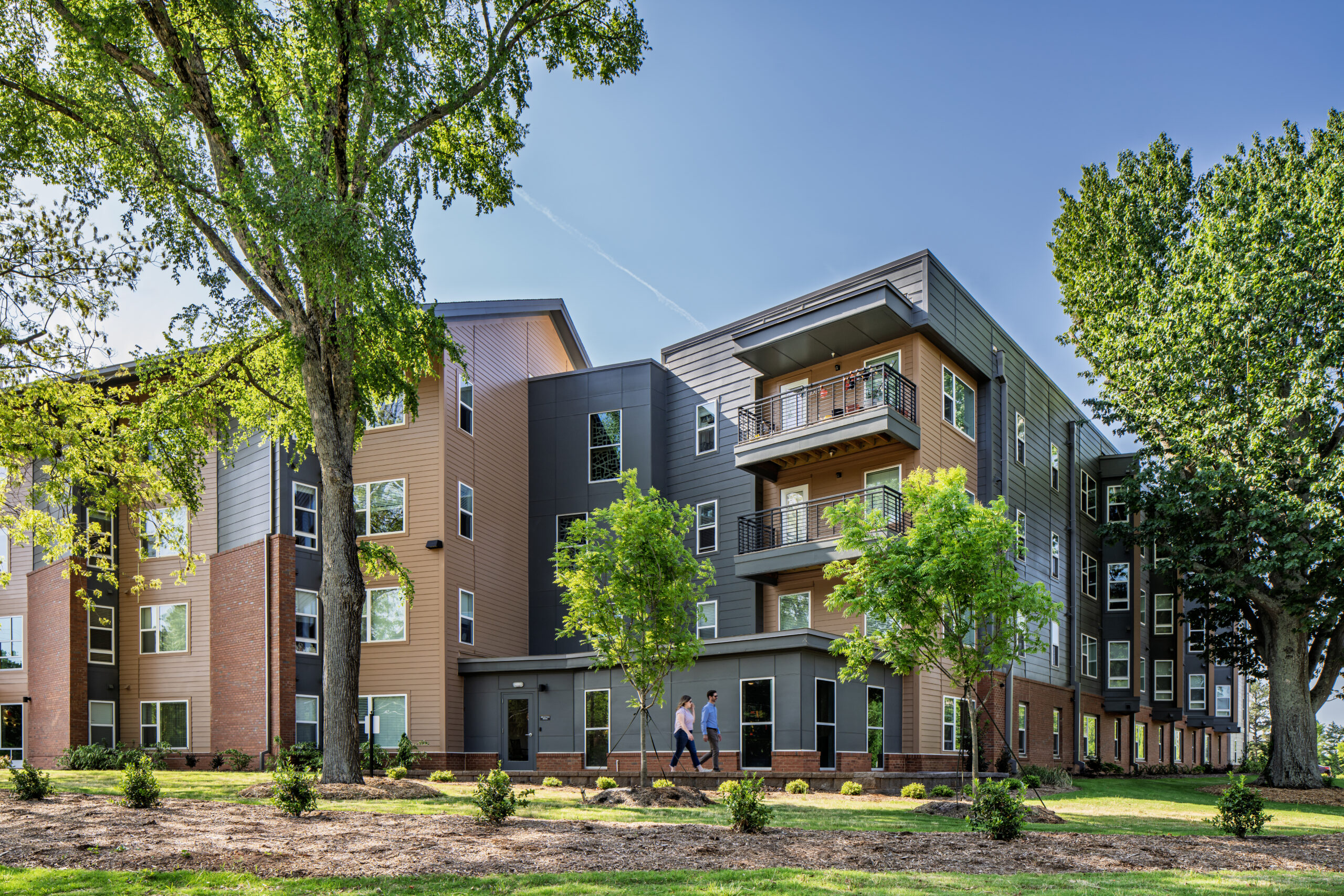
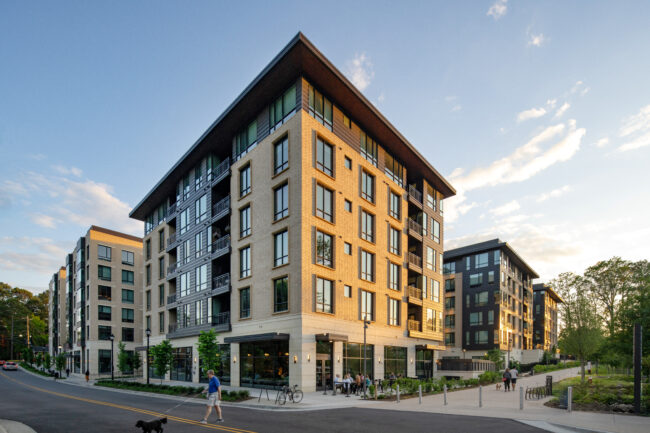
Milner Commons
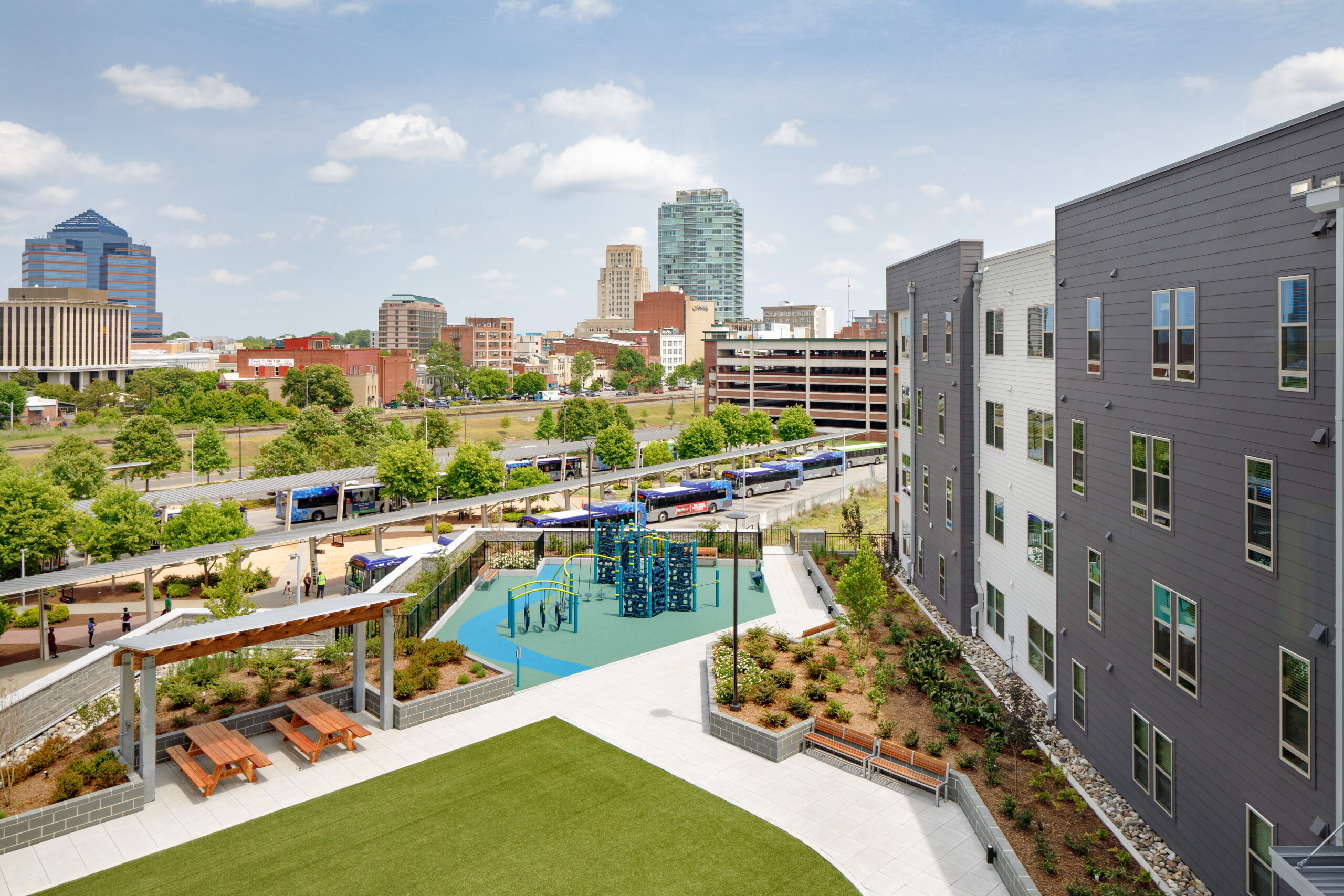
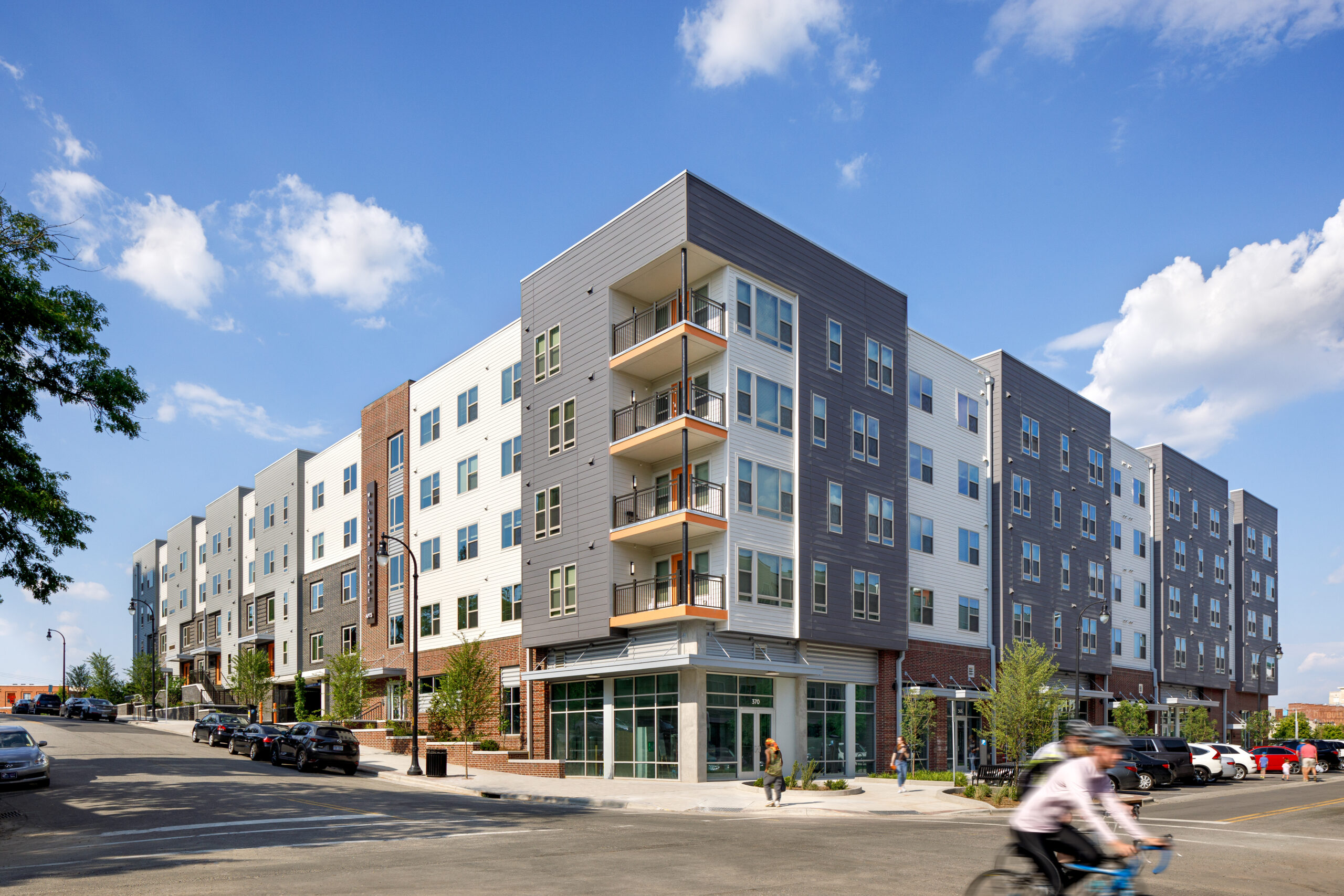
Willard Street Apartments
Projects like Milner Commons and Willard Street Apartments show what that looks like in practice. Milner Commons brings affordable senior living to a changing East Raleigh neighborhood, supporting independence and a sense of belonging while being near future bus rapid transit. Willard Street Apartments places affordable housing in downtown Durham, next to the Durham Station Transportation Center, with ground-floor space that connects residents to the community and services around them.
Affordable and senior housing, in particular, offer a lesson for the broader housing conversation: inclusion creates stronger communities, but delivering it means facing real constraints such as land use, rising development costs, infrastructure gaps, and funding.
Housing isn’t just one building or complex. It’s a system of interconnected places, beyond the project boundary, that support people throughout their lives.
Density is a neighborhood experience, not just a number
In housing, even though density can quickly become a hot topic, the most useful conversation isn’t how many units fit on a site. It’s what kind of neighborhood experience those homes create.
Walkable streets, active ground floors, and transit access turn density into daily convenience: easier access to coffee shops, grocery stores, parks, and schools, all within a short walk. It’s a more efficient use of land than sprawl, while still creating stronger, connected communities.
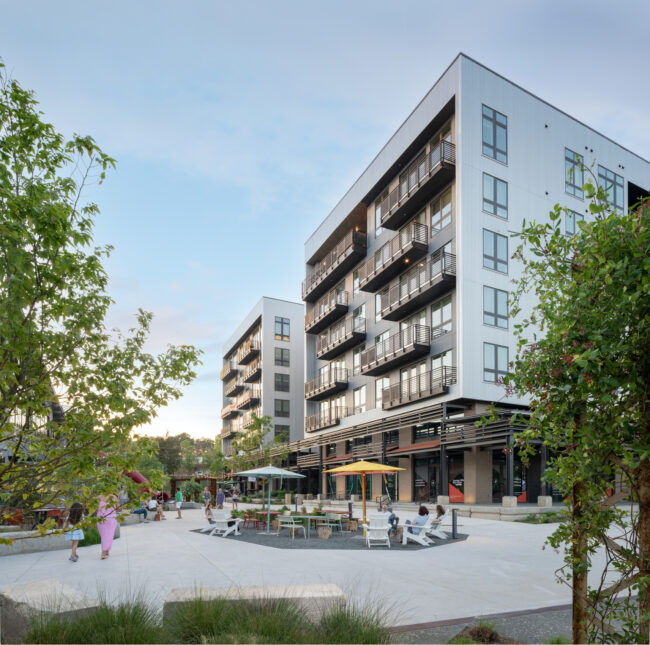
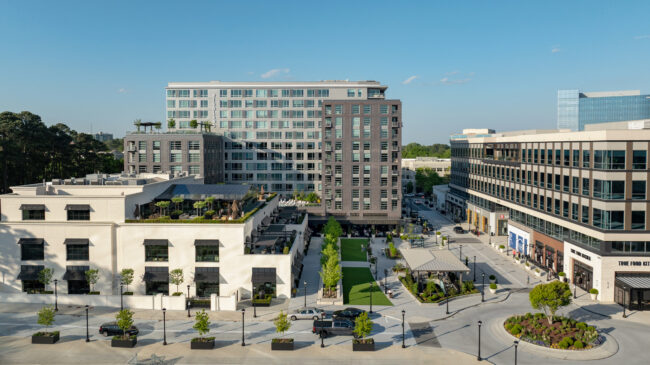
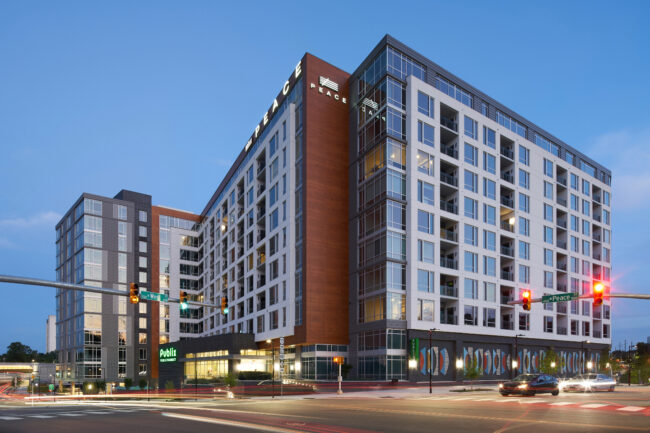
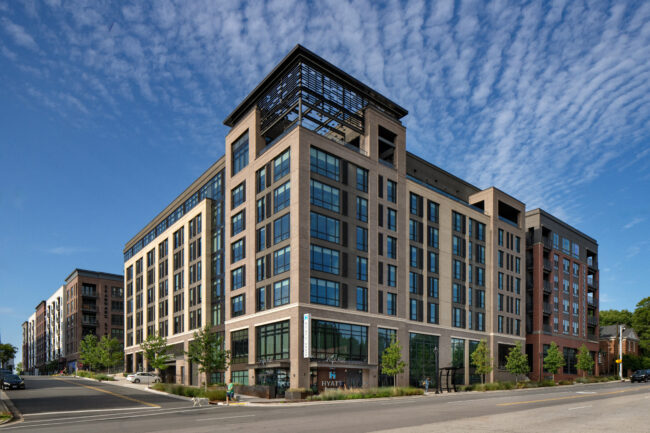
Mixed-use communities are one way this comes to life. Peace Raleigh Apartments + Publix helped reestablish Downtown Raleigh’s Northern Gateway and brought a full-service grocery store to downtown Raleigh, giving residents and the surrounding Smoky Hollow neighborhood immediate access to fresh food. Seaboard Station continues that momentum nearby, contributing to Raleigh’s urban growth by integrating housing, retail, walkability, and the public realm into a cohesive neighborhood experience. Highland North Hills offers another example of connected density, where housing was linked to a broader network of existing retail, restaurants, workplaces, services, and gathering spaces. These are not just individual buildings. They are places where daily life has become more connected.
These lessons apply well beyond large mixed-use districts. Every project can consider daily life: how residents arrive, where they gather, how the building meets the street, how landscape softens the experience, and how the community connects to what already exists around it.
Poorly designed density can feel disconnected, oversized, or imposed. Done thoughtfully, with attention to street width, scale, and how people experience a place at the ground level, well-done density can make 1 + 1 equal more than 2. The goal is not simply to add more housing. The goal is to create places where more people can live well.
Designing the experience of living well
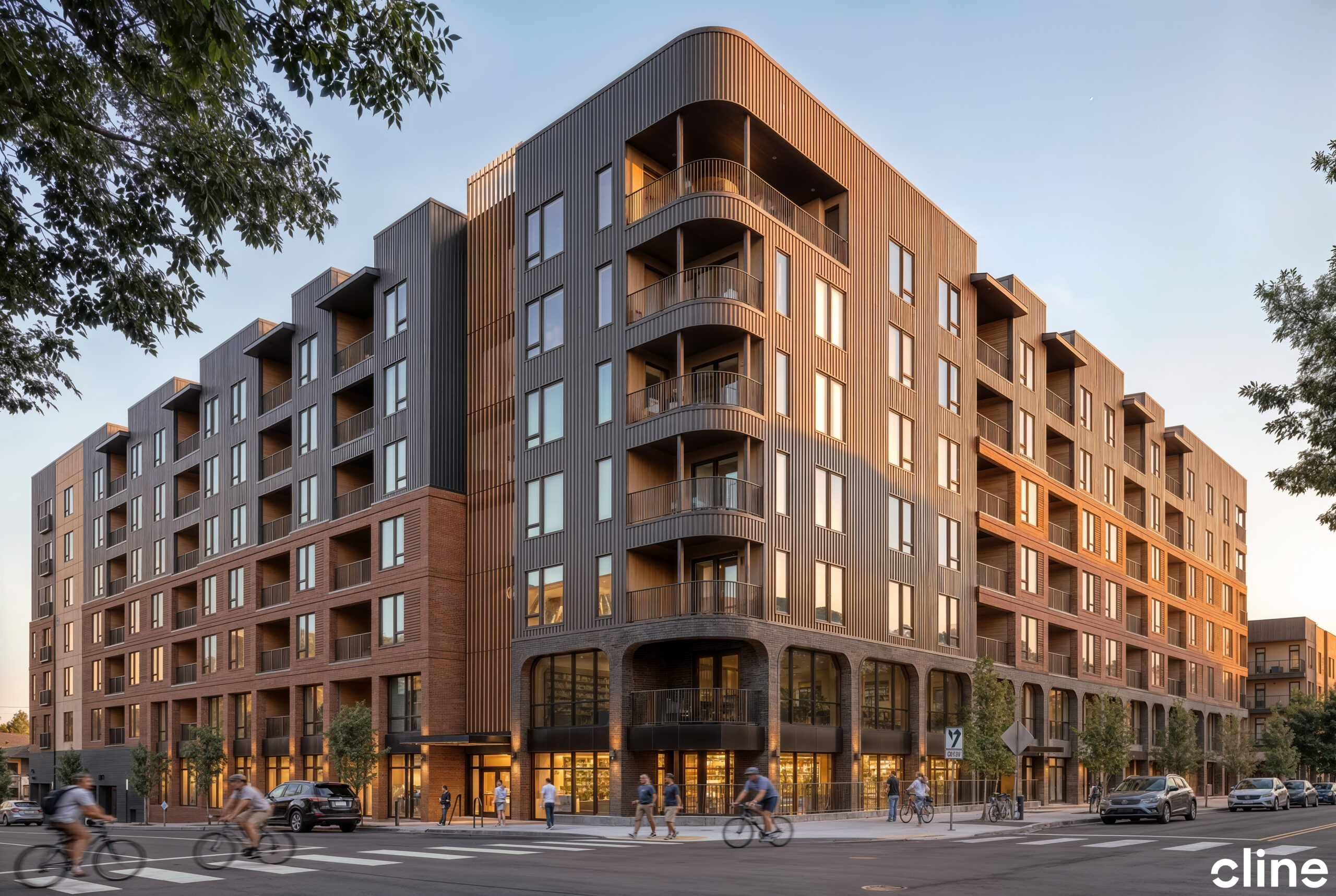
Cline’s work across multifamily, affordable, senior, workforce, townhome, and mixed-use housing gives us a wide view of the role housing plays in North Carolina’s growth. We see housing not as a single sector, but as an interconnected system of places. These places support people, families, neighborhoods, and local economies.
This perspective aligns with how North Carolina is framing its next phase of growth: infrastructure, competitiveness, community well-being, workforce readiness, and quality of life. For those of us in the design community, the opportunity is clear: to help translate community-focused goals into physical places that work for residents, clients, and future generations.
At Cline, we believe home is more than where people live. It’s where work, family, rest, and community come together. It’s where daily routines become relationships and where growth becomes personal.
Housing is economic infrastructure because it is human infrastructure.
Housing gives workers proximity to opportunity, families stability, older adults autonomy, and neighborhoods vitality. It gives communities the capacity to grow without losing sight of quality of life.
As North Carolina prepares for long-term growth, our design challenge isn’t simply how to build more. It’s how to create places that support the people, systems, and relationships that make growth sustainable.
Designing the experience of living well means designing the places that allow communities to grow well. And that’s what we’re here to do.
Dan Rider is Design Director at Cline, where he helps guide the firm’s design vision across housing, mixed-use, and community-focused work. This perspective was inspired by North Carolina’s First in Opportunity Strategic Economic Development Plan and its focus on the systems that help communities grow well. Read the full state plan or download Cline’s Housing Is Economic Infrastructure whitepaper.